
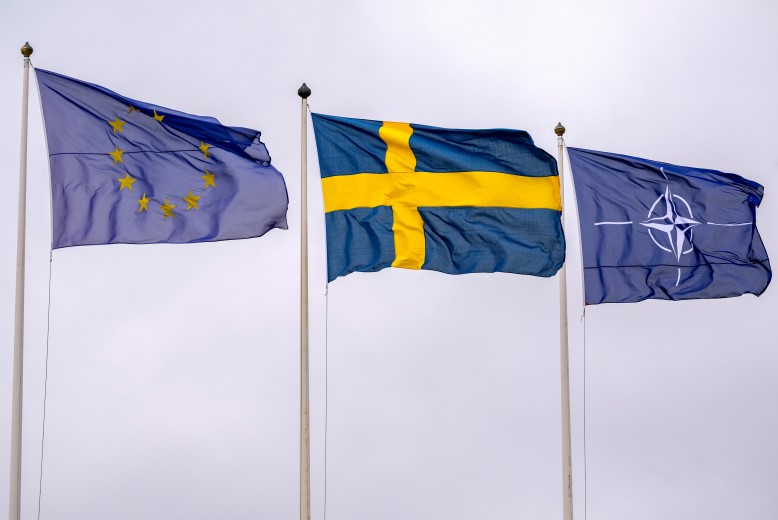
Prepared Together? NATO–EU Cooperation and Sweden’s Societal Security
How the EU and NATO cooperate has become crucial to Sweden’s societal security. In a context shaped by hybrid threats, cyberattacks, and cross‑border crises, this research project examines how cooperation between the two organisations works in practice – and what it means for Sweden’s preparedness, resilience, and crisis management.
Sweden’s societal security increasingly depends on effective cooperation between the European Union and NATO. Hybrid threats, cyber-attacks, disinformation, pandemics, and climate-related disasters all require coordinated responses that cut across institutional and national boundaries.
This three-year research project, funded by the Swedish Research Council (VR), examines how NATO and the EU cooperate in areas central to Sweden’s preparedness: critical infrastructure protection, hybrid threats, and emergency response. The project also investigates whether growing geopolitical tensions — including strains in transatlantic relations — influence cooperation between the two organisations.
Drawing on alliance theory, inter-organisational theory, and practice theory, the project studies cooperation at the operational level. Through document analysis, elite interviews, and participant observation, we analyse NATO–EU collaboration along three dimensions:
- Strategic alignment – shared priorities and threat perceptions
- Structural compatibility – institutional and procedural fit
- Cultural coherence – trust, norms, and working practices
The project contributes to academic debates on inter-organisational cooperation while generating policy-relevant insights into Sweden’s societal resilience.
On this page, you find selected publications by the research team relevant to the project.