Butiken
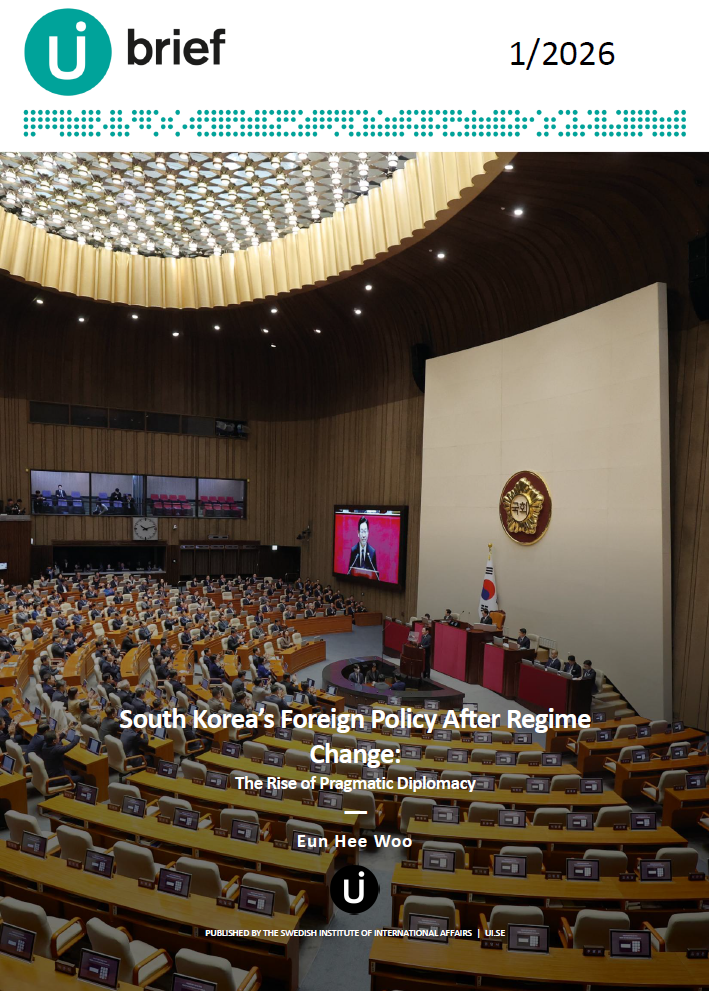
South Korea’s Foreign Policy After Regime Change: The Rise of Pragmatic Diplomacy
Research
This article examines the transformation of South Korea’s foreign policy following the impeachment of President Yoon Suk-yeol and the rise of President Lee Jae-myung. It argues that South Korean foreign policy can be understood through four relational “mirrors”: North Korea, the United States, Japan, and China, each of which has historically shaped South Korean national identity and continues to influence political divisions. Under Yoon, foreign policy was framed as “values-based diplomacy,” aligning South Korea with the U.S.-led liberal order, strengthening trilateral security cooperation with Japan, and taking a firmer stance toward North Korea and China. His declaration of martial law, widely viewed as contradicting the democratic values he espoused, intensified domestic divisions and deepened the crisis within the conservative camp. In contrast, Lee has advanced pragmatic diplomacy prioritizing national interest and economic stability. While maintaining the U.S.–Japan–South Korea framework, his administration seeks to recalibrate relations with major powers and manage domestic anti-China sentiment. This shift not only reflects the growing strain within South Korea’s conservative camp but may intensify it. If Lee succeeds in stabilizing the economy and reinforcing South Korea’s standing as a middle power, segments of the moderate conservative electorate may gradually gravitate toward Lee’s Democratic Party, reshaping South Korea’s political landscape and its foreign policy trajectory.